Assumable Loans and ARMs in Dallas-Fort Worth: A November 2026 Guide
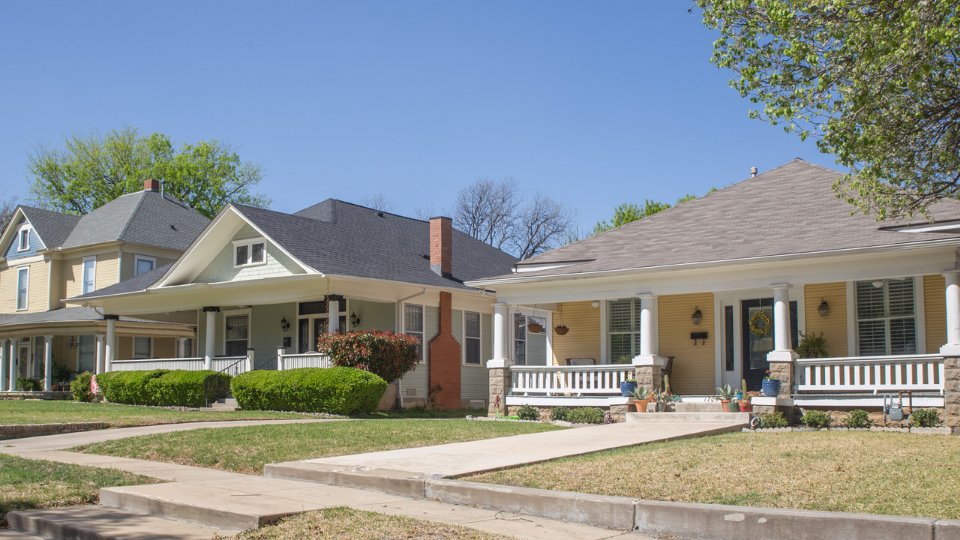
Houses in the Fairmount-Southside Historic District in Fort Worth, photographed April 6, 2022. This is an established neighborhood of existing homes, shown as an example of the kind of housing stock where a lower-rate assumable loan or an adjustable-rate mortgage might already be in place. It is not a listing, a new development or a photo of a specific loan. Photo: Renelibrary, via Wikimedia Commons, CC BY-SA 4.0, cropped to fit. Original file: Fairmount Historic District Fort Worth Wiki (1 of 1).jpg.
When the average 30-year fixed mortgage is still above 7%, the cheapest financing in Dallas-Fort Worth is often a loan someone already has. Two kinds of existing loans matter more than usual this fall: government-backed mortgages a qualified buyer may be able to assume, and adjustable-rate mortgages whose introductory rate is about to expire.
SmartPropLeads recently published a weekly tracker of assumable FHA, VA and USDA loans and adjustable-rate mortgages it can identify in the metro from recorded deeds of trust, closed sales and public HMDA records. That article is the starting point for this guide. The loan-level counts on that tracker are the firm's own estimates, and OnDemand Realty has not independently audited them, so this post does not repeat those figures. What follows is an original explainer for DFW buyers and sellers: how assumptions work, why the equity gap trips people up, what an ARM reset can do to a payment in 2026 and 2027, and what to do next.
Key Takeaways
- New-loan rates are still far above the early 2020s. Freddie Mac's Primary Mortgage Market Survey put the average 30-year fixed rate at 7.11% as of November 12, 2026, down from 7.18% the week before and up from 6.24% a year earlier. In the week of January 7, 2021, the same survey hit a modern low of 2.65%.
- FHA, VA and USDA loans are generally assumable, with approval. A qualified buyer can take over the seller's remaining balance, interest rate and remaining term. Most conventional loans cannot be assumed, because they include a due-on-sale clause.
- The equity gap is the hard part. The assumed loan covers only what is still owed, not the purchase price. The buyer has to bring the difference in cash or with a second loan the programs and the servicer will accept.
- VA entitlement is a separate question from liability. A non-veteran can assume a VA loan if they qualify. The seller's VA entitlement usually stays tied to the loan unless another eligible veteran substitutes their own.
- Many ARMs originated in 2019 through 2022 are reaching their first reset in 2026 and 2027. A 5/1 ARM taken out in late 2021 resets this year. A 7/1 ARM from 2019 or 2020 resets now or next year. The first reset date, the index, the margin and the caps are all in the note.
- Sellers have different decisions depending on the loan. A low-rate assumable mortgage can be a strong listing feature. An ARM that is about to reprice is a reason to look at refinancing, selling or adjusting the budget before the new payment starts.
Where Mortgage Rates Sit in November 2026
Freddie Mac's Primary Mortgage Market Survey is the weekly national average most often cited in housing news. The November 12, 2026, release reported:
| Loan type | Average rate as of Nov. 12, 2026 | Prior week | A year earlier |
|---|---|---|---|
| 30-year fixed | 7.11% | 7.18% | 6.24% |
| 15-year fixed | 6.45% | 6.57% | 5.49% |
Freddie Mac said this was the fourth consecutive weekly decline and the lowest 30-year average in seven weeks. The survey is a national average for conventional, conforming purchase applications, generally for borrowers putting 20% down with strong credit, not a quote for a specific DFW loan.
The gap that matters is not this week's dip. It is the distance from today's rate back to loans originated at historic lows. Freddie Mac's survey averaged 2.65% in the week of January 7, 2021, the lowest reading in the history of that survey. Many DFW buyers who closed in 2020 and 2021, especially with FHA or VA financing, are still carrying a rate in the 2s or low 3s unless they later refinanced.
That spread shows up in principal and interest. The figures below are rounded monthly payments on a $300,000 loan amortizing over 30 years, principal and interest only. They do not include taxes, insurance, mortgage insurance or HOA dues.
| Rate | Monthly principal and interest on $300,000, 30 years | Context |
|---|---|---|
| 2.65% | $1,209 | Freddie Mac average, week of January 7, 2021 |
| 3.00% | $1,265 | A round figure near many 2020-2021 closings |
| 6.24% | $1,845 | Freddie Mac average one year earlier, November 2025 |
| 7.11% | $2,018 | Freddie Mac average as of November 12, 2026 |
The difference between 3.00% and 7.11% on that $300,000 balance is about $753 a month, or roughly $9,000 a year, in principal and interest alone.
The official NTREIS Monthly MLS Summary Report for October 2026, produced November 7, 2026, by the Texas Real Estate Research Center, put the Dallas-Fort Worth-Arlington single-family median sale price at $381,000, down 2% from a year earlier. The examples later in this post use a round $400,000 sale price, close to that metro median, and are labeled as illustrations.
What It Means to Assume a Mortgage
When you assume a mortgage, you do not take out a new loan at today's rate. You step into the seller's existing loan: same remaining balance, same interest rate, same remaining term. The lender has to approve you first. After closing, you make the seller's payment, on the seller's rate, for whatever term is left.
That last point is easy to miss. A 30-year loan originated in November 2021 has about 25 years left in November 2026. The assumed payment is the payment already in place, not a new 30-year quote on the remaining balance. You also take on whatever mortgage insurance, if any, still sits on that loan.
FHA, VA and USDA loans are generally written to be assumable, with the lender's approval and under each agency's rules. Most conventional loans are not, because they include a due-on-sale clause that requires the balance to be paid off when the home is sold. A buyer should still ask, because a few portfolio or credit-union loans allow an assumption, but that is the exception.
The first question on any given house is simple: what kind of loan does the seller have, and has it been refinanced since the purchase? A refinance out of FHA, VA or USDA into a conventional loan usually takes the assumable feature with it. Confirm the current loan with the seller and the servicer before anyone writes an offer around the rate.
How FHA, VA and USDA Assumptions Work
The three government programs share a basic idea and then diverge on the details that decide whether a deal is workable. The comparison below is a planning summary, not a substitute for the servicer's current checklist.
| Topic | FHA | VA | USDA guaranteed |
|---|---|---|---|
| Who can assume | A creditworthy buyer the servicer approves. For loans closed on or after December 15, 1989, private investors may not assume the loan, and the buyer generally must occupy the home. | Any purchaser who meets VA credit and income standards, including a non-veteran. The loan must be current at closing. | A buyer who meets USDA eligibility rules, including income and occupancy tests. Rural Development must approve the transfer first. |
| What the buyer takes over | The remaining balance, rate and term, plus any FHA mortgage insurance that still applies. | The remaining VA balance, rate and term. | The entire outstanding guaranteed debt, at a rate no higher than the original loan. |
| Seller liability | If the assumptor is found creditworthy and agrees to pay the debt, the lender is required to release the seller. | An approved assumption includes a release of liability on the loan. Entitlement is a separate issue, discussed below. | Current rules state that the transferor must remain personally liable. Sellers should confirm this with the lender and Rural Development. |
| Typical extra costs | HUD raised the maximum reasonable and customary processing fee from $900 to $1,800 in a May 20, 2024, Handbook 4000.1 update. Ask the servicer for the current fee. | A funding fee of 0.5% of the outstanding balance, unless the assumer is exempt. | A new guarantee fee on the remaining principal, plus lender and agency costs. |
| Timeline | Plan on weeks, not days, for the creditworthiness review. | Holders with automatic authority have 45 calendar days to decide a complete application. | The lender must submit a credit, income and underwriting analysis and obtain Agency approval. |
Sources for the table: HUD's Handbook 4155.1, Chapter 7 and FHA INFO 2024-30; the VA funding fee page (last updated October 5, 2026), VA Circular 26-23-10 and VA Form 26-10291; and 7 CFR 3555.256 for USDA guaranteed loans. USDA also originates some direct Section 502 loans under different rules. If the loan is a USDA direct loan, ask Rural Development which handbook applies. On post-1989 FHA loans, the buyer generally must occupy the home as a principal residence or a HUD-approved secondary residence.
The VA entitlement catch
Anyone who qualifies can assume a VA loan, including a buyer who has never served. If the assumption is approved, the seller can be released from the monthly payment obligation. That is not the same thing as getting the seller's VA entitlement back.
The seller's entitlement stays tied to the assumed loan unless the buyer is an eligible veteran or service member with enough available entitlement, occupies the home, and completes a Substitution of Entitlement at the time of the assumption. If that substitution does not happen, the entitlement is usually not restored until the loan is paid in full. If the loan later goes to a VA claim, that loss can also follow the original veteran's entitlement. Sellers who may need a VA loan on their next home should settle this in the listing plan, not after a contract is signed with a non-veteran buyer.
USDA has its own tests
USDA guaranteed loans can be assumed even if the house now sits in an area that is no longer designated rural, which matters on the edges of the metro as DFW has grown outward. The buyer still has to meet the program's eligibility rules, and the property has to meet, or be brought up to, USDA site and dwelling standards. If a second loan is needed to close the equity gap or fund repairs, Rural Development may approve a supplemental guaranteed loan when there is enough security. None of that is automatic.
The Equity Gap, in Plain Numbers
The assumed loan covers the unpaid principal, not the sale price. The difference is the equity gap, and the buyer has to fill it.
Here is a labeled illustration, not a quote on a specific house. Suppose a seller lists a home at $400,000, near the October 2026 NTREIS metro single-family median of $381,000. The seller still has a 3.00% FHA loan that started at $320,000 in November 2021, with a 30-year term. The principal and interest payment is about $1,349 a month. After 60 payments, about $284,500 is still owed, and 25 years remain.
- Sale price: $400,000
- Remaining assumable balance: about $284,500 at 3.00%, with 25 years left
- Equity gap: about $115,500
- Assumed principal and interest: about $1,349 a month
If the same buyer instead took out a new 30-year loan at 7.11% for 80% of the price, or $320,000, the principal and interest payment would be about $2,153 a month. The difference is about $804 a month, or roughly $9,650 a year.
The catch is the $115,500 gap. The buyer can pay it in cash, which is why assumable loans often fit move-up buyers who are bringing equity from a sale. Or the buyer can try to finance the gap with a second loan, if the program rules and the servicer allow it. A second loan at 7.11% for 30 years on $115,500 would add about $777 a month. Combined with the assumed payment, total principal and interest would be about $2,126, still a little below the new first-lien quote, and the buyer would be paying down two balances, one of them at 3.00% with only 25 years left. A 15-year second loan on the same gap would cost about $1,045 a month, bringing the combined payment to about $2,394, which is no longer a payment win against a new 30-year first lien.
This is why a listing that advertises an assumable rate without the remaining balance is incomplete. The rate is only half of the story. The gap is the other half.
FHA guidance has long allowed secondary financing on an assumption when the repayment terms are clearly defined and included in underwriting. USDA may approve a supplemental guaranteed loan when security is adequate. Neither option is a given. Closing costs still exist, and FHA mortgage insurance, when it applies, usually stays with the assumed loan.
What Buyers Should Check Before They Write an Offer
An assumable rate is not a promise until the servicer says yes. Before anyone structures a contract around the loan, get these items in writing:
- The current loan type, unpaid principal balance, interest rate and remaining term, preferably from a recent servicer statement.
- The name of the servicer, and whether the loan has been refinanced. A later refinance can replace an assumable government loan with a conventional loan that cannot be assumed.
- Occupancy and eligibility rules that apply to this loan. A post-1989 FHA loan is not a vehicle for a non-occupant investor. A USDA assumption still has income and occupancy tests.
- How the equity gap will be funded. If a second loan is part of the plan, ask early whether that structure is allowed.
- Fees, mortgage insurance and the review timeline. Put a realistic approval period in the contract, with a clear exit if the servicer declines the buyer.
- The seller's release and, for VA loans, the entitlement plan.
A pre-approval for a new loan is useful as a backup. It is not a substitute for the assumption application. If the assumption does not work or the gap is too large, see our November 2026 guide to how much home you can afford in Dallas-Fort Worth.
The opportunity is real, and it is narrower than a headline makes it sound. It tends to fit buyers who can close the equity gap, live with the remaining term and wait through a servicer review. It is often a poor fit for a first-time buyer with little cash, because a five-year-old loan on a house that has gained value can leave a six-figure gap.
Ask about financing type on every listing that interests you, including homes that are not advertised as assumable. Then run the payment both ways: the assumed loan plus the cost of filling the gap, and a new loan at a current quote. Buyers who cannot assume a loan still have other payment tools, including a seller-paid temporary buydown. Our guide to seller-paid 2/1 buydowns walks through that option.
ARM Resets Arriving in 2026 and 2027
An adjustable-rate mortgage holds an introductory rate for a set number of years, then adjusts on a schedule written into the note. The common purchase products are 5/1, 7/1 and 10/1 ARMs: a fixed rate for five, seven or 10 years, then an adjustment once a year. The label on your loan is the one that counts.
The Consumer Financial Protection Bureau explains the math this way. After the introductory rate expires, the new rate is the index plus the margin, subject to the loan's caps. The index moves with the market. The margin was set when you took out the loan and does not change.
Caps typically come in three layers, as the CFPB describes them:
- An initial adjustment cap, commonly 2 or 5 percentage points, that limits the first change after the fixed period.
- A subsequent adjustment cap, commonly 1 or 2 percentage points, that limits each later change.
- A lifetime cap, commonly 5 percentage points above the start rate, though some loans are written with a higher cap.
If you have an ARM, write down the first reset date, the index, the margin and those three caps, then ask the servicer or a lender to calculate the highest payment the loan could require. The CFPB notes that borrowers can also find that worst-case figure on the original Loan Estimate or Truth-in-Lending disclosure.
The calendar is what makes this a 2026 and 2027 issue. A 5/1 ARM closed in late 2021 reaches its first reset this year. A 5/1 closed in 2022 resets in 2027. A 7/1 closed in 2019 or 2020 resets now or next year. This post does not attempt to count how many DFW ARMs reprice in the next year, because those loan-level figures are not something we can independently verify here.
The payment change can be material even when a cap limits the first jump. Here is a labeled illustration. Suppose a household took out a $360,000 5/1 ARM at 4.75% in November 2021, amortizing over 30 years. The introductory principal and interest payment is about $1,878 a month. After 60 payments, about $329,400 remains, and 25 years are left.
| First reset rate | Why this rate | New principal and interest, 25 years left | Change from $1,878 |
|---|---|---|---|
| 6.75% | Start rate plus a 2-point initial cap | About $2,276 | Up about $398 a month |
| 7.11% | This week's Freddie Mac 30-year average, if the cap allows it | About $2,351 | Up about $473 a month |
| 9.75% | Start rate plus a 5-point initial cap | About $2,935 | Up about $1,057 a month |
These are principal and interest only, on an illustration, not an escrowed payment and not a prediction of any one index. A 2-point cap would stop the first reset at 6.75% even if the fully indexed rate were higher. A 5-point cap would not stop a move to 7.11%, and it would allow a much larger jump if the index plus margin called for one. Taxes and insurance do not reset on the same day, but they still sit in the same escrow, which is why an unplanned first reset can feel sudden in DFW.
What This Means for Sellers
If you have a low-rate FHA, VA or USDA loan, that loan is part of the value of the house. Market it with facts: the loan type, the interest rate, the unpaid balance, the remaining term, the fact that a buyer must be approved, and a realistic estimate of the equity gap at your list price. A buyer who can do the math may accept a stronger price because the monthly cost is still lower than a new loan. A buyer who cannot close the gap is not a qualified assumptor, no matter how much they like the rate.
Sellers with a VA loan should decide, before the first showing, whether they need their entitlement back for the next purchase. If they do, the marketing plan should aim at a veteran buyer who can complete a Substitution of Entitlement, or at a structure that pays the loan off. Sellers with a USDA guaranteed loan should ask the lender, in writing, what happens to their personal liability after an assumption. Do not rely on how FHA or VA treat a release.
If you have an ARM with a reset in the next 12 to 36 months, the work starts now:
- Read the note and get a written estimate of the first adjusted payment, including the cap that applies to that first change.
- Price a refinance into a fixed-rate loan. Compare the new payment, the closing costs and how long you plan to stay. A refinance is not automatically a win if your introductory rate is still lower than today's 7.11% average, but it can be the right move if the reset will jump sharply or if you want payment certainty.
- Look at selling before the reset if the new payment will not fit the budget. Time on market in parts of DFW is longer than it was in 2021, so a last-minute listing is a weak plan. Our November 2026 guide to the cost of selling a house in Texas outlines the fees on that path.
- Revisit the household budget before the first adjusted payment posts. If you are considering renting the home instead, confirm occupancy rules, insurance and local leasing restrictions first.
Owners with a 2% or 3% fixed-rate loan generally should not refinance into the mid-7s just because rates have been in the news. The assumable feature, if you have one, is usually more valuable left in place until you sell. Our guide to the MBA Mortgage Applications Index can also help you time a listing or a refinance conversation.
What to Do Next
If you want to buy and hope to assume a loan:
- Get pre-approved for a new loan as a backup, then ask a lender who has closed assumptions how they would process an FHA, VA or USDA takeover.
- On each serious house, ask for the current loan type, balance, rate, remaining term and servicer.
- Run the equity-gap math at the list price and at a price you might actually offer.
- Write any offer with an assumption-approval contingency and a timeline that matches servicer review, not a standard new-loan clock.
If you are selling a home with an assumable loan:
- Confirm the loan is still the original government loan, or document the current loan if you refinanced.
- Gather a written balance, rate and remaining term you are willing to share with qualified buyers.
- For a VA loan, get advice on entitlement before you accept a non-veteran assumptor.
- Put the assumable facts in the listing remarks, and be ready to explain the gap.
If you have an ARM resetting in 2026 or 2027:
- Find the first reset date, index, margin and caps in your note this week, not the week the new payment posts.
- Ask the servicer for a projected first adjusted payment.
- Compare that figure with a fixed-rate refinance quote and with a sale timeline, then pick a path while the introductory rate is still in effect.
Frequently Asked Questions
What is an assumable mortgage?
It is a loan a qualified buyer can take over from the seller, with the same rate, remaining balance and remaining term, after the lender or servicer approves the buyer. FHA, VA and USDA loans are built to allow this. Most conventional loans are not.
Can I assume a conventional loan in Texas?
Usually no. Most conventional loans include a due-on-sale clause, which means the balance is due if the home is sold. A few portfolio or credit-union loans are written to allow an assumption, so it is fair to ask. Do not plan on it unless the note and the servicer say the loan can be assumed.
How do I pay for the equity gap?
The assumed loan never covers the seller's equity. The buyer brings cash, obtains a second loan the program and servicer will accept, negotiates a lower price that shrinks the gap, or uses some combination of those options. If you cannot fund the gap, the attractive rate will not get you to closing.
Can a non-veteran assume a VA loan?
Yes, if they meet VA credit and income standards and the loan is current. The seller can be released from liability on an approved assumption, but the seller's VA entitlement typically stays with the loan unless the buyer is an eligible veteran who substitutes their own entitlement.
When will my ARM reset, and how high can the payment go?
The first reset date is in your note. For a 5/1 ARM, that is five years after closing; for a 7/1, seven years. The new rate is the index plus the margin, limited by the loan's caps. The only reliable way to know the ceiling is to read those terms and have the servicer or a lender calculate the maximum payment.
How long does a loan assumption take?
Longer than a simple refinance story suggests. VA has a 45-calendar-day decision clock for a complete application when the holder has automatic authority. FHA and USDA reviews also take weeks, and the clock does not start until the file is complete. Build that into the contract.
Related OnDemand Realty Posts
- How Much Home Can You Afford in Dallas-Fort Worth? A November 2026 Guide
- Seller-Paid 2/1 Buydown: Worth It? Pros, Cons and Math
- Why Buyers and Sellers Should Track the MBA Mortgage Applications Index
- How Much Does It Really Cost to Sell a House in Texas? November 2026 Guide
- DFW Housing Market Update November 2026: Prices, Inventory, and What It Means for You
Thinking About Buying or Selling in Dallas-Fort Worth?
OnDemand Realty helps buyers and sellers across the metro, from first homes in Fort Worth and southern Dallas to moves into Plano, Frisco, McKinney and beyond. If you want help finding out whether a specific listing has an assumable loan, running the equity-gap math, or planning around an ARM reset, start at www.ondemanddfw.com.
Disclaimer: This post is for general information only. It is not a loan offer, a pre-approval, a commitment to assume a mortgage, a refinance quote or a formal market analysis. Mortgage rates are from Freddie Mac's Primary Mortgage Market Survey as of November 12, 2026, and they change weekly. The 2.65% figure is Freddie Mac's survey average for the week of January 7, 2021. The $381,000 metro median is from the NTREIS Monthly MLS Summary Report for October 2026, produced November 7, 2026, by the Texas Real Estate Research Center. Payment tables and the $400,000 and $360,000 examples are rounded principal-and-interest illustrations only; they are not quotes and they exclude taxes, insurance, mortgage insurance and HOA dues. Program rules are summarized from HUD, VA and USDA materials cited above and can change. OnDemand Realty is not a mortgage lender, and it is not affiliated with Freddie Mac, HUD, the Department of Veterans Affairs, USDA Rural Development or SmartPropLeads. This post does not repeat or endorse SmartPropLeads loan-level counts. Confirm the current loan, eligibility, fees, entitlement, liability and any second-lien structure with the servicer and a qualified lender.
Categories
Recent Posts