McKinney Share the Shade 2026: Free Tree Giveaway on Nov. 14, Plus the Best Trees and Planting Tips for Homeowners
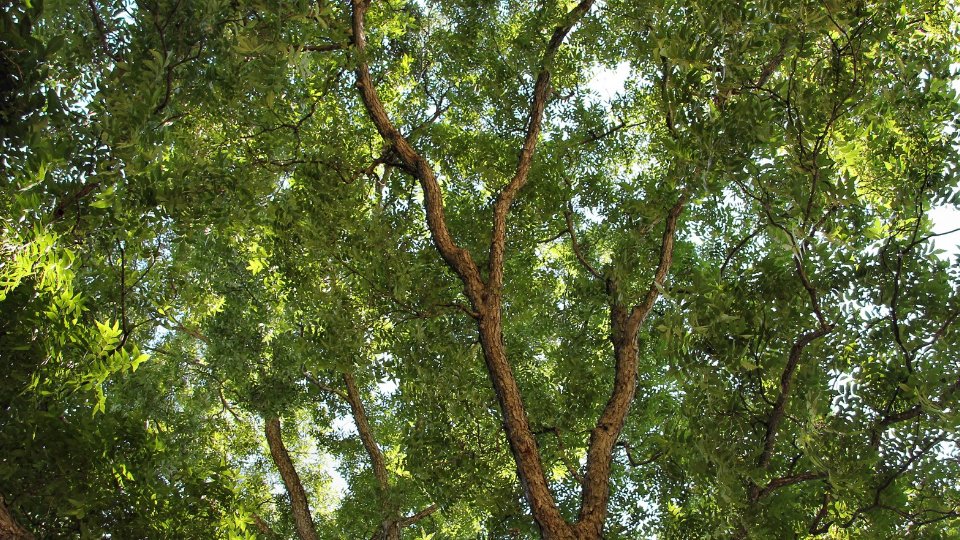
Illustration only: the canopy of a mature pecan tree (Carya illinoinensis) in Zilker Park, Austin, Texas (photo taken July 14, 2013). Pecan is one of the six tree types in McKinney's 2026 giveaway, but the trees handed out are young 5-gallon plants, not full-grown trees like this one. This is not a photo of the McKinney event. Photo: "Pecan tree canopy zilker" by Larry D. Moore via Wikimedia Commons, CC BY 4.0, cropped to fit.
If you live in McKinney, McKinney Share the Shade is the rare city program where you can walk away with a free tree. The City of McKinney is giving away free 5-gallon trees to residents on Saturday, November 14, 2026, from 10 a.m. to 1 p.m. at City Hall, 401 E. Virginia St., on a first-come, first-served basis to celebrate Texas Arbor Day. That is just days away, so if you want a tree, read the quick facts below and plan your Saturday.
This November 2026 guide covers what the City has confirmed about the giveaway, the six trees on offer and how they actually behave in North Texas yards, and the homeowner questions that matter after you get a tree home: where to plant it, why you must call 811 first, how to water it, what it can do for your energy bills and your home's value, and what to check with your HOA.
Official source: all program details come from the City of McKinney's Share the Shade page. Confirm the details there before you go, because cities can change event details at the last minute.
Key Takeaways
- When and where: Saturday, Nov. 14, 2026, 10 a.m. to 1 p.m., City Hall, 401 E. Virginia St., McKinney.
- Cost: free. The City says free trees will be given to McKinney residents.
- How it works: first-come, first-served, while supplies last. The City's page does not list an application or sign-up.
- Tree size: 5-gallon container trees, so they are young and small.
- Six choices: Mexican Plum, 'Bubba' Desert Willow and Texas Mountain Laurel (medium-size ornamentals), plus Shumard Red Oak, Pecan and Autumn Blaze Maple (large canopy trees).
- Not confirmed by the City's page: a per-household limit, proof-of-residency rules, delivery, or reservations. Plan on picking up in person.
- Before you plant: call 811 at least two business days before you dig. Texas law requires it, even in your own backyard.
- Placement matters more than the tree: large trees need roughly 20 to 30 feet from the house, and Pecan and Shumard Red Oak can grow 50 to 90 feet tall or more.
Share the Shade 2026: What the City Has Confirmed
Here is everything the City's page states, and the details it does not.
| Question | Answer | Source |
|---|---|---|
| What is it? | Annual free tree giveaway to celebrate Texas Arbor Day | City of McKinney, Share the Shade page |
| Date | Saturday, November 14, 2026 | City of McKinney |
| Time | 10 a.m. to 1 p.m. | City of McKinney |
| Location | City Hall, 401 E. Virginia St., McKinney | City of McKinney |
| Who gets trees | McKinney residents | City of McKinney |
| How trees are given out | First-come, first-served | City of McKinney |
| Supplies | "While supplies last" (stated by City staff at the Nov. 3, 2026 council work session) | City Council work session, Nov. 3, 2026 |
| Cost | Free | City of McKinney |
| Tree size | 5-gallon | City of McKinney |
| Species | Six, listed below | City of McKinney |
| Arbor Day recognition | The mayor recognized Nov. 14, 2026 as Arbor Day in McKinney | City Council work session, Nov. 3, 2026 |
What the City has not stated
We could not find any of the following on the City's page or in the Nov. 3 council recording, so we do not state them as facts.
| Question | Status as of Nov. 11, 2026 |
|---|---|
| Is there a limit on trees per household or per person? | Not confirmed |
| Do you need to show proof of McKinney residency (such as an ID or utility bill)? | Not confirmed |
| Can you register or reserve a tree ahead of time? | Not confirmed. The City's page lists no sign-up. A local news site (McKinney Community Pulse, Nov. 6, 2026) reports there is no application or income requirement, but that is not an official statement. |
| Does the City deliver trees or offer curbside pickup? | Not confirmed. The page describes an in-person event at City Hall. |
| How many trees of each type are available? | Not confirmed |
| Will staff be on hand to answer planting questions? | Not confirmed for 2026. The same local news site says City parks staff have historically attended. |
| Parking details | Not confirmed. City Hall is in downtown McKinney, so allow extra time. |
If any of these matter to you, check the City's page again the morning of the event or contact the City's planning department through the contact information on the page.
The Six Trees in the 2026 Giveaway
The City lists two groups. Ornamental trees are medium size at maturity. Canopy trees are large at maturity. The table below combines the City's descriptions with mature-size ranges from the AgriLife Extension tree guide for Texas. Sizes are ranges for ideal conditions, so treat them as a planning guide.
| Tree | Type | City's description | Typical mature size (AgriLife guide) | Homeowner notes |
|---|---|---|---|---|
| Mexican Plum (Prunus mexicana) | Ornamental | Drought tolerant; fragrant white flowers Feb. to April; fruit usable in jam | 15 to 20 ft tall, 15 to 20 ft wide | Prefers well-drained soil. The guide advises planting away from walkways because the fruit can make a mess. |
| 'Bubba' Desert Willow (Chilopsis linearis) | Ornamental | Drought tolerant, low maintenance, pollinator friendly; orchid-like flowers April to September | 15 to 25 ft tall, 10 to 20 ft wide (species) | Light, airy shade. Needs well-drained soil. 'Bubba' is a named variety, so its size may differ from the species. |
| Texas Mountain Laurel (Dermatophyllum secundiflorum) | Ornamental | Large blue and purple blooms Feb. to April; evergreen; grape-like fragrance | 12 to 20 ft tall (guide lists it as Sophora secundiflora) | The guide notes the seeds are toxic, which matters if you have kids or pets. |
| Shumard Red Oak (Quercus shumardii) | Canopy | Long lifespan, drought tolerant, brilliant red fall color, fast-growing | 50 to 90 ft tall | Prefers well-drained soil. Susceptible to oak wilt, so see the pruning note below. |
| Pecan (Carya illinoinensis) | Canopy | Long lifespan, drought tolerant, the State Tree of Texas; nuts October to December | 80 to 95+ ft tall | Slow growing and needs deep soil, according to the guide. |
| Autumn Blaze Maple (Acer x freemanii) | Canopy | Drought tolerant once established (2+ years); red fall color; grows 2.5 to 5 ft a year | Not listed in the AgriLife guide | See the note below on maples in North Texas soil. |
How to choose from the six
- Small lot or a spot near the house: pick one of the three ornamentals. They stay small enough to fit most front yards and beds.
- Large lot, greenbelt or back corner: Shumard Red Oak and Pecan are long-term shade trees that can eventually reach well over 50 feet. Do not plant either close to the house or under power lines.
- Fall color: Shumard Red Oak and Autumn Blaze Maple both turn red, per the City's page.
- Pollinators and flowers: Desert Willow, Texas Mountain Laurel and Mexican Plum all bloom. The City lists Desert Willow and Mountain Laurel as pollinator friendly.
- Quick shade: the City calls Shumard Red Oak and Autumn Blaze Maple fast-growing. Pecan is slow growing, per the AgriLife guide. Be realistic: a 5-gallon tree takes years to shade a roof.
A word on Autumn Blaze Maple and oak wilt
Experts do not all agree on every tree. The City describes Autumn Blaze Maple as drought tolerant once established with brilliant fall color. North Texas horticulturist Howard Garrett (The Dirt Doctor) advises skipping the Autumn Blaze and October Glory hybrid maples in this region, citing chlorosis in higher-pH soils, sunscald and short life spans. The Arbor Day Foundation also cautions against planting several clones of the same cultivar, because diversity protects a neighborhood from future pests. If you take the maple, plant it where it gets good drainage, protect the thin bark, and watch the leaves for yellowing between the veins. If you want the most proven long-term shade tree on the list, Shumard Red Oak and Pecan are Texas natives.
Oaks carry one more rule. The AgriLife guide says to avoid pruning oaks from February 1 through June 30 because the beetles that spread oak wilt are active then, and to paint any oak wound promptly. Plan your oak pruning for the cooler months.
How to Get a Free Tree on Saturday
- Check the City's page the morning of the event for any change: mckinneytexas.org/3328/Share-the-Shade.
- Decide where it will go before you arrive. Walk your yard, measure, and pick the tree that fits the space. Use the placement rules below.
- Call 811 now. Texas811 needs two business days (not counting weekends or holidays) to have utilities mark underground lines, and the law says to call before any digging, including planting a tree. Calling this week means the marks are ready when you want to plant.
- Arrive close to 10 a.m. The City distributes trees first-come, first-served while supplies last, and a local news report says a line typically forms before opening. Bring your own transport.
- Bring a way to carry a 5-gallon plant. A tarp or old blanket in the back of a vehicle protects your seats and keeps the pot upright. Do not carry the tree by the trunk.
- Plant it soon. Keep the container in a sheltered spot and keep the soil damp until it goes in the ground.
The same morning, the City's Holiday Craft Fair runs from 10 a.m. to 2 p.m. at the Senior Recreation Center on South College Street, according to McKinney Community Pulse.
Where to Plant: Distances, Utilities and Foundations
The biggest mistake with free trees is planting them in the wrong place. Use these guidelines before you dig.
Call 811 first
Texas law requires homeowners to contact 811 at least two business days before digging, "even if you're working in your own backyard," and planting a tree is listed as a reason to call (Texas811). The service is free. Wait for all utilities to respond and mark their lines before you start. If you hire a landscaper, it is the contractor's job to call, but you can ask for the ticket number. Remember that 811 does not mark your private sprinkler lines, so locate those yourself.
Distances from the house and from lines
| Item | Guideline | Source |
|---|---|---|
| Large tree (over 40 ft mature height) from a wall | At least 20 ft from a wall and 15 ft from a corner | Arbor Day Foundation |
| Medium tree (up to 40 ft) from a wall | At least 15 ft from a wall and 12 ft from a corner | Arbor Day Foundation |
| Small tree (25 ft or less) from a wall | At least 8 to 10 ft from a wall and 6 to 8 ft from a corner | Arbor Day Foundation |
| A tree that may reach 100 ft | At least 30 ft from the foundation, patio or walkways | AgriLife Extension |
| Buried utility lines | Stay at least 5 ft away; 10 ft or more over sewer lines | Arbor Day Foundation |
| Overhead power lines | Do not plant a tree taller than 25 ft at maturity directly under the lines or within 20 ft of the pole-to-pole centerline | Arbor Day Foundation |
Pecan and Shumard Red Oak both reach large sizes, so many suburban lots do not have room for them close to the home. Put them as far from the foundation as your lot allows. AgriLife's 30-foot figure is a safe target for the biggest trees. Your city and utility may also restrict planting near easements, sidewalks and street lights.
Choose the right spot for shade
The U.S. Department of Energy says tall deciduous trees with high, spreading branches work best on the south side of a house for summer roof shade, and trees with lower branches work best on the west side to block afternoon sun. Deciduous trees drop their leaves in fall, which lets winter sun reach the house.
How to Plant and Water Your Tree
Late fall through early spring is the best planting window for deciduous trees. The AgriLife Extension forestry specialist quoted in AgriLife Today prefers early fall once soil has enough moisture, because roots keep growing through winter, and a larger root system helps the tree handle its first summer. November fits that window.
Step-by-step planting
- Check the hole location for drainage. Fill the empty hole with water. If it takes longer than 24 hours to drain, choose another site (Texas Forest Service).
- Dig the hole at least twice as wide as the root ball and no deeper. Planting too deep is a leading cause of death in new trees.
- Set the root collar at or slightly above the surrounding soil. The root collar is where the trunk meets the roots. Keep it from being buried.
- Handle the tree by the pot or root ball, not the trunk. Slide it out of the container and loosen any circling roots so they point outward.
- Backfill with the same soil that came out of the hole. Skip soil amendments, and settle the soil with water instead of packing it down.
- Mulch 2 to 3 inches deep, out to the drip line, but not touching the trunk.
- Stake only if needed, and remove stakes within a year.
- Skip fertilizer in the first growing season. Too much nitrogen can burn tender roots.
- Protect the trunk from string trimmers. Thin young bark is easily damaged.
Watering schedule
The Texas Forest Service says a newly planted tree needs about 6 to 8 gallons of water per inch of trunk diameter per week for at least the first two years, applied as a deep soaking rather than light, frequent sprinkling. The AgriLife Extension specialist recommends a soaker hose just beyond the root ball and watering every three to four days during the first summer, adjusted for soil type, and keeping sprinkler spray off the leaves. Clay holds water longer than sandy soil, so check the soil with your finger or a trowel before you water again. More trees die from too much water than too little once they are established, according to the Arbor Day Foundation, so soggy soil is a warning sign, not a goal.
What a Shade Tree Can Do for Your Energy Bill
Shade is not just comfortable. The U.S. Department of Energy reports that shading an air conditioner can raise its efficiency by as much as 10 percent, and a well-planned landscape can reduce an unshaded home's air-conditioning costs by 15 to 50 percent. The agency's older guidance also states that carefully positioned trees can save up to 25 percent of a household's energy use for heating and cooling.
Two honest caveats before you count the savings:
- A 5-gallon tree takes time. The Department of Energy notes that 6- to 8-foot deciduous trees planted near a house begin shading windows the first year, but a slow-growing tree can take up to 10 years to shade a roof. Savings arrive gradually.
- Savings depend on placement. A tree on the north side does almost nothing for summer cooling. South and west placement matters.
Evergreen trees and shrubs on the north and northwest side can also deflect cold winter winds, which the Department of Energy says can lower heating needs. Texas Mountain Laurel is the only evergreen in the giveaway, and it stays small, so its windbreak effect is limited. The City's page also lists winter windbreak as one reason to plant a tree.
Do Trees Add Home Value and Curb Appeal?
Generally yes, but the size of the effect varies, and a young tree adds little on day one. A University of Washington review of residential tree studies found that properties with trees are generally preferred to comparable properties without them, with the trend across studies about a 7 percent price increase. The individual results ranged widely:
| Condition studied | Price increase reported |
|---|---|
| Mature yard trees (over 9 inches in diameter) | About 2% |
| Larger street trees | About 3% |
| Trees in front yard landscaping | 3 to 5% |
| Good tree cover in a neighborhood | 6 to 9% |
| Mature trees in high-income neighborhoods | 10 to 15% |
Source: University of Washington, Green Cities: Good Health, "Community Economics."
The same review cautions that the price effect depends on how tree presence is defined and on the neighborhood. In other words, do not expect a free sapling to raise your appraisal this year. The payoff comes as the canopy matures, shades the house and frames the front yard.
Curb appeal tips that buyers notice:
- Place a flowering ornamental, such as Mexican Plum or Desert Willow, where it frames the front door or a front window without blocking it.
- Give canopy trees room so branches never rub the roof or crowd the street.
- Keep mulch fresh and tidy, a ring out to the drip line, and keep it off the trunk.
- Pick a tree with seasonal interest (spring bloom or red fall color) so the yard looks good in more than one photo season.
HOA Rules and City Rules to Check
- Read your HOA documents. Many McKinney neighborhoods have an HOA with a declaration and design guidelines. Some require approval before you plant a tree in a front yard, restrict tree species or locations, or require a minimum number of trees. A free tree from the City does not exempt you from those rules, so submit an architectural request if your community requires one.
- Drought-resistant landscaping. Texas Property Code Section 202.007 says a property owners' association may not enforce a provision that prohibits or restricts drought-resistant landscaping or water-conserving natural turf. An HOA may still ask for a plan so the landscaping looks compatible with the neighborhood, and it may not unreasonably deny approval. This section has exceptions and does not address every tree, so ask your HOA how it applies.
- Easements and common areas. Do not plant in utility easements, drainage easements, or common areas or strips that the HOA or City owns. Your plat or survey shows these.
- City tree preservation rules. McKinney's Tree Preservation ordinance applies to all properties in the city. Removing protected trees, including mature "quality" and "specimen" trees, can require a tree permit and mitigation under the Unified Development Code. If you are buying or selling a home with large mature trees, ask which trees are protected before you plan a removal or a project. Details are on the City's Tree Preservation page.
Selling or Buying Soon? How Trees Fit In
If you plan to sell in the next few years, a healthy, well-placed tree is a low-cost addition, but a large tree planted too close to the house can raise concerns during an inspection. If you are buying, look at the canopy: mature shade trees are a real feature, but check the distance to the foundation, roof and power lines, and look for oak wilt, storm damage and root problems. Your agent can help you factor tree-related maintenance into your offer and negotiate repairs found in inspection.
Frequently Asked Questions
When is the McKinney Share the Shade giveaway?
Saturday, November 14, 2026, from 10 a.m. to 1 p.m. at City Hall, 401 E. Virginia St., McKinney.
Is the tree really free?
Yes. The City says free trees will be given to McKinney residents on a first-come, first-served basis.
Do I have to sign up or prove I live in McKinney?
The City's page does not list a sign-up or residency requirement beyond saying the trees are for McKinney residents. A local news site reports no application, but proof-of-residency rules are not confirmed, so bring something showing your McKinney address to be safe.
How many trees can I take?
The City has not published a limit per household. Supplies are limited, so take what you can plant.
What kinds of trees are offered?
Mexican Plum, 'Bubba' Desert Willow, Texas Mountain Laurel, Shumard Red Oak, Pecan and Autumn Blaze Maple, all in 5-gallon containers.
Do I need to call 811 to plant a tree?
Yes. Texas law requires you to contact 811 at least two business days before digging, even in your own yard.
When is the best time to plant a tree in North Texas?
Late fall through early spring is best for deciduous trees. An AgriLife Extension specialist prefers early fall once the soil has enough moisture, so roots can grow through the winter.
How far from my house should I plant a big shade tree?
For trees that grow over 40 feet, the Arbor Day Foundation recommends at least 20 feet from a wall and 15 feet from a corner. AgriLife Extension suggests at least 30 feet for trees that may reach 100 feet. When in doubt, plant farther away.
Can I plant a tree if I'm in an HOA?
Often yes, but check your HOA's declaration and design guidelines first. Some communities require approval for trees, especially in front yards.
Will a tree raise my home's value?
Studies generally find a positive effect, with a typical trend of about 7 percent, but results vary a lot by tree size, location and neighborhood, and young trees add little at first.
Related Reading from OnDemand Realty
- Our Favorite 10 Home Builders in Dallas-Fort Worth (2026)
- The Fields Frisco TX: Homes, Fields West and 2027 Outlook
- Daylight Saving Time 2026 Ends in DFW: Why We Fall Back and What Time Sunset Is Now
- DFW Pumpkin Patches 2026
- Seller-Paid 2/1 Buydown: Worth It? Pros, Cons and Math
Thinking About Buying or Selling a Home in McKinney?
OnDemand Realty helps buyers and sellers across Dallas-Fort Worth. Whether you want a home with mature shade trees or you are preparing your yard to sell, start your search and connect with our team at www.ondemanddfw.com.
Sources
- City of McKinney, "Share the Shade" (official program page, checked Nov. 11, 2026).
- City of McKinney, City Council work session of Nov. 3, 2026 (Arbor Day proclamation and Share the Shade remarks).
- City of McKinney, "Tree Preservation / Urban Forestry."
- McKinney Community Pulse, "Roots in the Community: McKinney's Share the Shade Gives Away Free Trees This Saturday" (Nov. 6, 2026).
- Texas811, "I Want to Dig" and "Homeowner Guide."
- AgriLife Today, "Tips on how to plant shade trees in Texas" (Oct. 29, 2020).
- Texas Forest Service, "Planting."
- AgriLife Extension, "Tree Answers" (2025).
- Williamson County Master Gardeners and AgriLife Extension, "Tree Selection and Planting Guide" (tree sizes and oak pruning guidance).
- Arbor Day Foundation, "Planting the Right Tree in the Right Place."
- U.S. Department of Energy, "Consumer Guide to Home Landscaping" and "Landscaping 101."
- National Renewable Energy Laboratory, "Landscaping for Energy Efficiency."
- University of Washington, "Community Economics, Green Cities: Good Health."
- The Dirt Doctor, Howard Garrett, "Maples for North Texas, Poor, Good and Better Choices" (Dec. 6, 2025).
- Texas Legislature, Property Code Section 202.007.
Disclaimer: This article is for general information only and is not legal, tax, landscaping or real estate advice. Program details come from the City of McKinney and the other sources listed, were checked on November 11, 2026, and can change without notice. Confirm event details with the City, utility locations with Texas811, and neighborhood rules with your HOA before you plant. OnDemand Realty is not affiliated with the City of McKinney.
Categories
Recent Posts